Mehbooba Mufti Meets Mirwaiz Umar Farooq in Srinagar: Drug Crisis, Youth Concerns and Kashmir’s Political Conversation
By: News Desk | 27 September 2026
First formal interaction in years brings two influential Kashmir voices together as concern grows over substance abuse and other social challenges facing young people
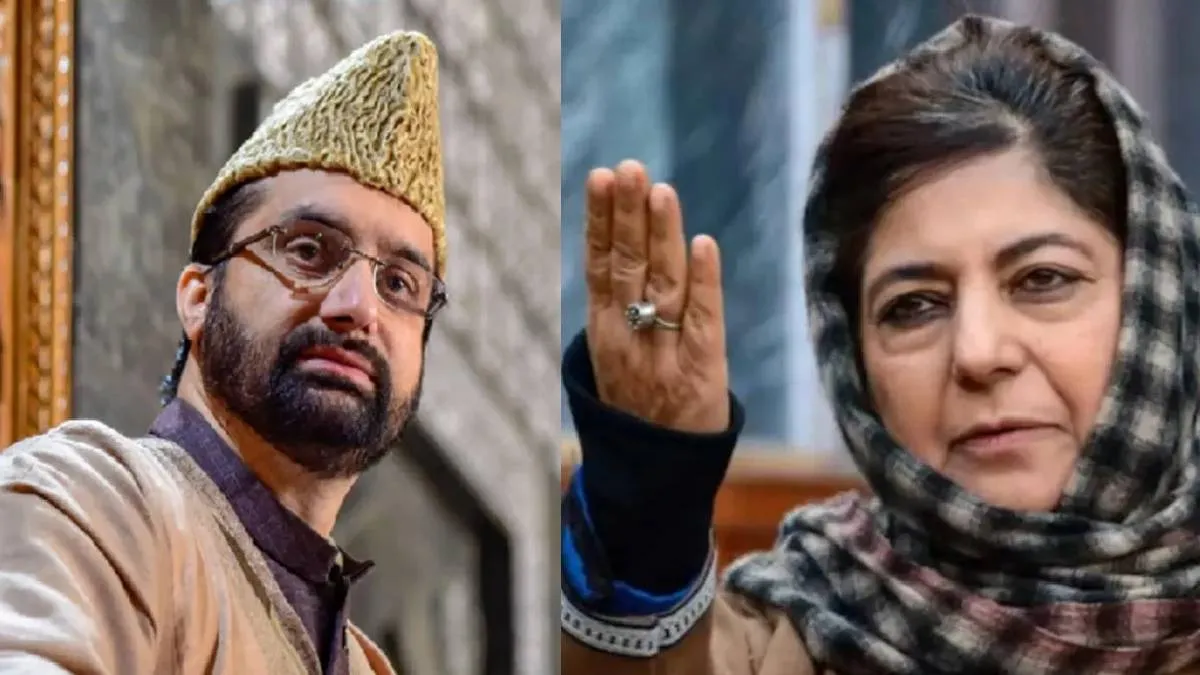
Srinagar, Sept 28: The meeting between Peoples Democratic Party president Mehbooba Mufti and Kashmir’s chief cleric Mirwaiz Umar Farooq at the latter’s Srinagar residence has brought two influential but historically distinct voices in Kashmir’s public life into the same conversation, with drug abuse among youth, wider social concerns and the prevailing political situation in Jammu and Kashmir figuring prominently in their discussions.
Mehbooba met the Mirwaiz on Sunday, in what available reports describe as their first formal interaction in years. Mirwaiz confirmed that the two discussed societal concerns and the need for a collective response involving different sections of society, besides discussing the political situation in Jammu and Kashmir.
“Mehboobaji visited me today. We had a conversation around the societal concerns and challenges facing us and the need to address them in a concerted manner taking all stakeholders along. We also discussed the prevailing political situation in Jammu and Kashmir in some detail. Overall it was a good interaction,” the Mirwaiz said, according to PTI.
The meeting comes at a time when Kashmir’s political conversation is again being shaped by questions of statehood, governance and the future political direction of the Union Territory, while concerns outside conventional politics, particularly substance abuse and the wellbeing of young people, are becoming increasingly prominent.
But the interaction should not automatically be read as the beginning of a formal political understanding between the PDP and the Mirwaiz.
The available information establishes a meeting and discussions on social and political issues. It does not establish any political alliance or common political programme.
A meeting around a problem that has moved beyond law enforcement
Among the most important subjects discussed was drug abuse.
The concern is not new, but the scale of the treatment response in Jammu and Kashmir illustrates why substance abuse has increasingly become a public-health and social issue rather than only a policing problem.
According to the Union Ministry of Social Justice and Empowerment, the number of people treated for drug addiction at government-supported centres in J&K increased from 5,382 in 2021-22 to 46,491 in 2025-26. The annual figures were 27,843 in 2022-23, 36,588 in 2023-24 and 40,546 in 2024-25.
The figures do not, by themselves, establish the prevalence of drug abuse among young people, because they measure people accessing treatment rather than the total number of users.
But they demonstrate the growing demand for treatment and rehabilitation services.
The Centre currently supports one Integrated Rehabilitation Centre for Addicts, six District De-Addiction Centres, two Community-Based Peer-Led Intervention programmes, three Outreach and Drop-In Centres and 21 Addiction Treatment Facilities in J&K under the National Action Plan for Drug Demand Reduction.
That infrastructure is increasingly being viewed alongside the larger social question: what happens to a young person after addiction is identified?
Treatment can address dependence.
But rehabilitation also involves families, schools, workplaces, mental-health professionals, community organisations and, in Kashmir’s case, religious institutions that continue to have considerable influence over social attitudes.
That is where the significance of the Mehbooba-Mirwaiz discussion becomes clearer.
Why the Mirwaiz is talking about social issues
Mirwaiz Umar Farooq’s public role has traditionally been associated with Kashmir’s political and religious discourse.
But in recent months, he has also been speaking about social questions affecting ordinary families.
The recent focus on substance abuse, self-harm and other problems confronting young people reflects an effort to bring issues of community wellbeing into the public conversation.
A recent gathering of religious scholars associated with the Mirwaiz also raised concerns over substance abuse, self-harm and environmental degradation, according to the reporting surrounding Sunday’s meeting.
This matters because drug dependence often carries a second layer of difficulty in conservative communities: stigma.
Families may delay seeking professional help because of fear of social judgment. Young people may hide addiction for the same reason.
A response based only on arrests and seizures therefore cannot address every dimension of the problem.
The discussion reported after Sunday’s meeting specifically pointed towards awareness, rehabilitation and the involvement of multiple stakeholders, including religious institutions, civil society, teachers and healthcare professionals.
The numbers tell only part of Kashmir’s drug story
Official data provides some indication of the scale of the problem, but it also needs careful interpretation.
A 2018 national survey cited by the Union government estimated 5.40 lakh opioid users in Jammu and Kashmir among people aged 10 to 75, along with estimated users of alcohol, sedatives, cannabis and inhalants. These are older prevalence estimates and should not be presented as a current 2026 count.
More recent enforcement data shows continued drug seizures.
Government data submitted in Parliament showed that drug seizures reported by all drug-law enforcement agencies in Jammu and Kashmir totalled 11,066 kg in 2023, 5,708 kg in 2024 and 4,491 kg in 2025.
Again, seizure volumes cannot be directly converted into the number of users or the prevalence of addiction.
They indicate enforcement activity and the quantity of substances seized, not the complete size of the market.
That distinction is important when discussing Kashmir’s drug problem.
The real challenge is not merely how much narcotics are seized.
It is how many young people develop dependency, how quickly they receive treatment, whether families seek help early, whether rehabilitation is sustained and whether recovering users can return to education, employment and ordinary social life.
Why the meeting also matters politically
The other subject discussed was the political situation in Jammu and Kashmir.
The meeting comes while the J&K Legislative Assembly is holding its autumn session, with major debates involving statehood, governance and the constitutional and political future of the Union Territory.
That provides an immediate political backdrop to the interaction.
But Mehbooba and Mirwaiz occupy different institutional and political spaces.
Mehbooba is the elected president of the PDP and a former chief minister.
Mirwaiz is Kashmir’s chief cleric and a prominent religious figure who has historically been associated with the Hurriyat political platform.
The fact that the two have now met formally after years therefore attracts attention because it crosses a political and institutional divide that has existed for a long time.
At the same time, the Mirwaiz’s statement about the meeting was measured.
He confirmed discussions on the political situation but did not announce any political arrangement, joint strategy or common programme.
That distinction is important.
A conversation about Kashmir’s political circumstances is not, by itself, evidence of political realignment.
A relationship shaped by Kashmir’s changing political landscape
The political distance between mainstream leaders and separatist figures became particularly complicated after August 2019.
Both Mehbooba and the Mirwaiz were detained following the Centre’s constitutional changes concerning Jammu and Kashmir.
Since then, Kashmir’s political landscape has changed considerably.
The former state became a Union Territory.
Elections returned an elected government in 2024.
The Legislative Assembly is now functioning again, while the question of restoration of full statehood remains a major issue in political debate.
Within that changed environment, interactions among political, religious and social figures can carry significance even when no formal political arrangement follows.
Mehbooba has also publicly advocated the Mirwaiz’s release from restrictions and criticised instances when he was prevented from delivering Friday sermons, according to recent reporting.
Sunday’s meeting therefore takes place against a background that extends beyond a single day’s conversation.
The Gurez controversy provided an immediate point of convergence
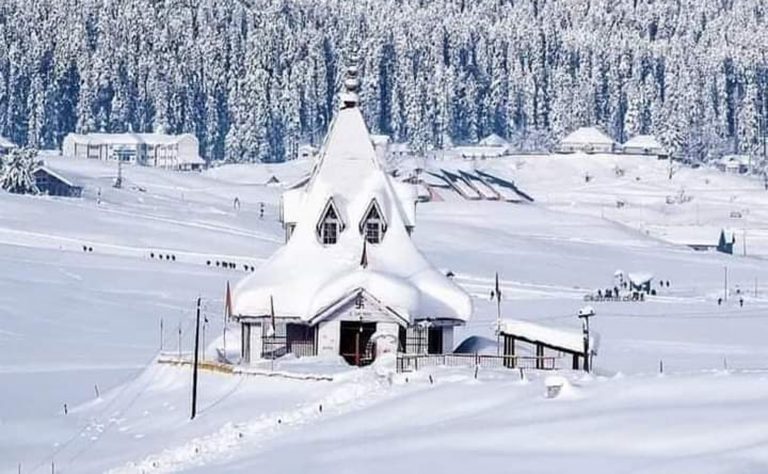
The meeting also followed a very recent episode in which Mehbooba and the Mirwaiz publicly expressed similar concerns about a proposed “Tantra in Silence” retreat advertised for Gurez.
The advertised programme was described as a four-day meditation retreat scheduled for September 24 to 27. Promotional material listed activities including meditation, sound healing, conscious living and inner transformation.
Mehbooba publicly asked the J&K administration to intervene.
Mirwaiz subsequently endorsed the concern and called for authorities to take note of the proposed event.
The episode generated controversy because of concerns expressed by political and religious figures about cultural and religious sensitivities in the region.
However, an important factual clarification came from the administration: no permission or authorisation had been granted for the proposed event, according to an official communication reported at the time.
That means the controversy should not be described as an officially authorised government programme.
The Gurez episode nevertheless became a point where Mehbooba and the Mirwaiz publicly voiced similar concerns.
Sunday’s meeting came only days later.
From cultural questions to social distress
The sequence is noteworthy because it shows two different kinds of public concerns coming together.
The Gurez episode was primarily about culture, religious sensitivities and the manner in which tourism and outside programmes interact with local social norms.
The meeting’s discussion of drug abuse is different.
It concerns a problem developing within Kashmir’s own society and affecting families and young people.
In that sense, the second issue may be more difficult to address.
There is no single outside programme to stop, no single organiser to scrutinise and no one administrative order that can solve it.
Substance abuse spreads through multiple channels and is connected to availability, social vulnerability, family circumstances, mental health, peer influence, economic conditions and access to treatment.
That requires a response involving institutions that do not ordinarily work together.
Why religious institutions can matter
Kashmir’s mosques, religious scholars and clerics remain influential in many communities.
Their involvement can help reduce the stigma associated with seeking treatment, particularly when addiction is discussed as a health and social problem rather than simply as a moral failure.
But religious messaging cannot replace professional treatment.
Addiction can require medical care, psychiatric support, counselling, rehabilitation and long-term follow-up.
The challenge is therefore to connect community awareness with professional services.
The emphasis attributed to Sunday’s discussion on bringing together religious institutions, civil society, teachers and healthcare professionals points in that direction.
The growing treatment burden is a warning in itself
The rise in the number of people accessing government-supported treatment deserves attention even though it cannot be interpreted simply as a rise in the number of addicts.
The government itself has described its anti-drug efforts in terms of prevention, treatment and rehabilitation.
In August 2026, the Union government said its Nasha Mukt Bharat Abhiyaan had sensitised more than 1.20 crore people in Jammu and Kashmir, while expanding treatment and rehabilitation infrastructure.
That suggests that the policy response is gradually moving beyond enforcement.
The challenge now is whether the system can provide enough accessible, confidential and sustained care for people who need it.
A young person may be willing to seek treatment once.
Recovery, however, often requires a much longer process.
That is where families and communities become critical.
Kashmir’s youth question is larger than drugs
The discussion of drug abuse cannot be isolated from the wider concerns surrounding young people in Kashmir.
Substance abuse exists alongside questions of employment, education, social isolation, mental health, family pressure and uncertainty about the future.
It would be inaccurate to claim that these factors automatically cause addiction.
But they form part of the broader social environment in which vulnerable young people live.
That is why the drug question increasingly demands more than police action.
The debate is shifting towards prevention.
How do schools identify vulnerable students?
How do families recognise early warning signs?
Where can a young person seek confidential help?
Can treatment be accessed without social stigma?
What happens after rehabilitation?
And can recovered young people return to education or employment without being permanently labelled by their past?
Those questions are ultimately more difficult than counting arrests.
What the Mehbooba-Mirwaiz meeting does and does not signal
The meeting clearly establishes that the PDP chief and Mirwaiz discussed both social concerns and the political situation.
It also follows a period in which the two publicly expressed similar concerns about the proposed Gurez retreat.
But the available statements do not establish a new political alliance.
Nor do they indicate that the Mirwaiz has entered electoral politics or that the PDP and the Hurriyat have reached a common political programme.
What can be established is narrower but still significant.
Two influential Kashmir figures, coming from different political and institutional backgrounds, have found space for conversation around issues that extend beyond electoral politics.
Drug abuse provided one immediate subject.
The broader political situation provided another.
And the recent Gurez controversy showed that social and cultural questions can sometimes create areas of shared concern even where political positions remain distinct.
A conversation that could move beyond politics
For Kashmir, the most consequential part of Sunday’s meeting may ultimately be the subject that affects families without regard to political affiliation.
Drug dependence does not ask whether a family supports the PDP, NC, BJP or any other political position.
Nor does it distinguish between rural and urban Kashmir.
It enters homes, affects education and employment, creates financial and emotional pressure and can leave families struggling to find appropriate treatment.
That makes the issue unusually suited to a broader social response.
Political leaders can raise awareness.
Religious leaders can help challenge stigma.
Teachers can identify warning signs.
Doctors and counsellors can provide treatment.
Civil society groups can assist families.
Government agencies can strengthen rehabilitation and enforcement.
None of these approaches is sufficient on its own.
The larger Kashmir conversation
Mehbooba Mufti’s meeting with Mirwaiz Umar Farooq therefore sits at the intersection of two conversations taking place in Kashmir.
One is political: statehood, governance, representation and the future relationship between Jammu and Kashmir and the Union government.
The other is social: what is happening to young people inside Kashmiri society and how families and institutions can respond.
The two conversations are often treated separately.
But for people living through them, they are not necessarily separate.
A society dealing with political uncertainty is also dealing with unemployment, family stress, addiction, mental-health concerns and changing social norms.
Sunday’s meeting did not resolve any of those questions.
Nor did it announce a new political arrangement.
But it brought two prominent Kashmir voices into a conversation about them.
And perhaps that is the most important fact to emerge from the meeting: before Kashmir’s larger political disagreements can be debated, there are also everyday social problems demanding attention from institutions across the political and religious spectrum.